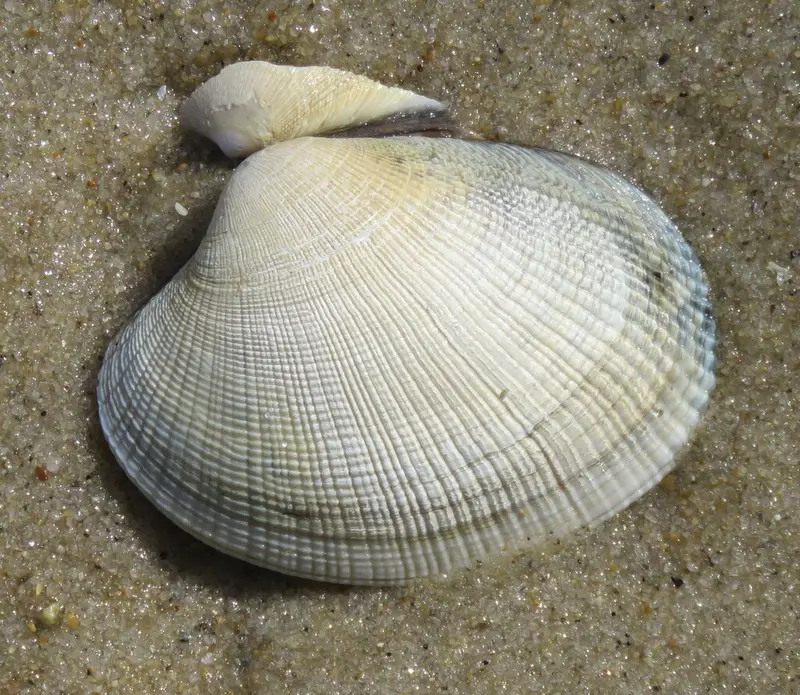
Manila clam
Ruditapes philippinarum
ShellfishClam
Manila clams came to the Northwest from Japan by accident, mixed in with young oysters.
Is it safe to harvest?
Pick a state below to see the health agencies' closures there. Always check before you harvest.
Where to catch it now
In all states.
Change state
- Alabama
- Arizona
- Arkansas
- California
- Colorado
- Connecticut
- Delaware
- Florida
- Georgia
- Idaho
- Illinois
- Indiana
- Iowa
- Kansas
- Kentucky
- Louisiana
- Maryland
- Massachusetts
- Minnesota
- Mississippi
- Montana
- Nevada
- New Hampshire
- New Jersey
- New Mexico
- New York
- North Carolina
- North Dakota
- Ohio
- Oklahoma
- Oregon
- Pennsylvania
- Rhode Island
- South Carolina
- South Dakota
- Tennessee
- Texas
- Utah
- Vermont
- Virginia
- Washington
- West Virginia
- Wisconsin
- Wyoming
Stocked lately
No catchable manila clam stocked here in the last 60 days.
Caught lately
No official catch counts for it here in the last 30 days.
How-to
- Shellfish safety · Check for biotoxin closures before every trip, mind the tide and the waves, and keep your catch cold. The basics for clams, oysters, mussels and crab.
- Hardshell clams · Littlenecks, Manila, butter clams, cockles and gapers: where each one hides, when to use a rake or a shovel, and how to leave the beach as you found it.
- Clean and cook small clams · Let clams spit out their sand, scrub them, and steam them until the shells open. Littlenecks, Manila clams, steamers and quahogs.
Clean and cook
Let them spit out sand, scrub them, and steam until the shells open.
Rules and numbers
Commercial landings
| State and year | Landed | Value at the dock | Per pound |
|---|---|---|---|
| Washington 2025 (preliminary) | 612,096 pounds | $11.3 million | $18.53 |
| Washington 2024 | 648,195 pounds | $12.3 million | $19.04 |
| Washington 2023 | 882,737 pounds | $16.4 million | $18.62 |
| Washington 2022 | 925,716 pounds | $17.4 million | $18.75 |
| Washington 2021 | 673,483 pounds | $10.8 million | $16.08 |
Yearly totals from NOAA Fisheries. The price is the average for the whole year at the dock, not today's price.
The scienceShow itHide it
- Family
- Veneridae
- ITIS TSN
- 81477 (opens in a new tab)
- Rating group
- Shellfish
- Agencies also spell it
- clam, manila, japanese littleneck, manila clam, manila littleneck, ruditapes philippinarum, venerupis philippinarum